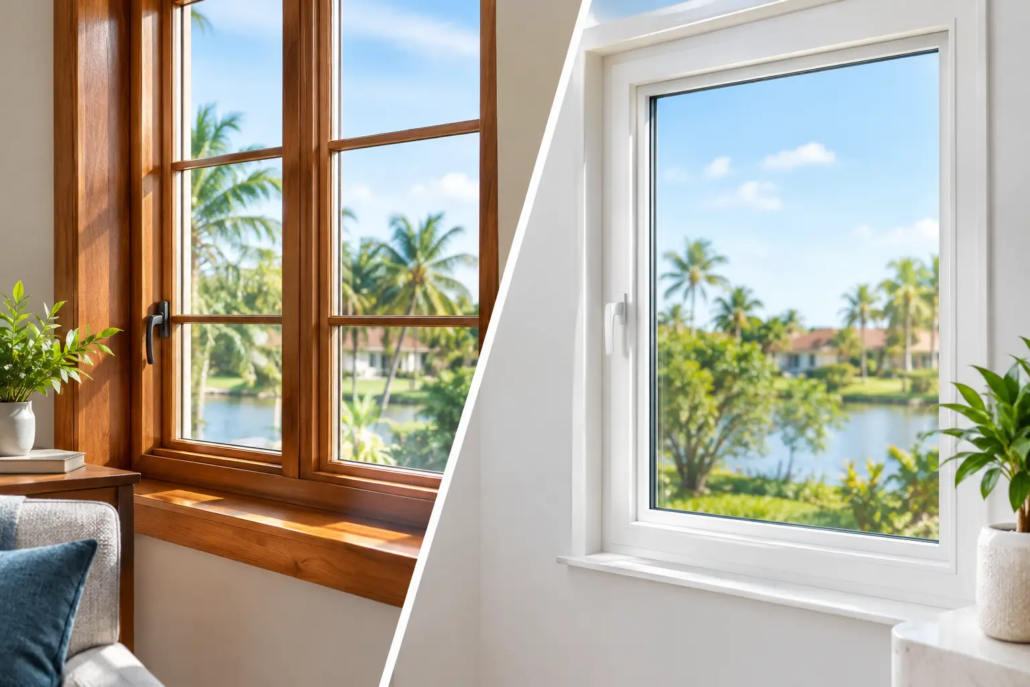
Wood Versus Vinyl Windows for Orlando Homes
A window frame has a bigger job in an Orlando home than simply holding glass in place. It has to stand up to intense sun, high humidity, heavy rain, and months of air-conditioning demand while still looking right on the house. That is why the choice of wood versus vinyl windows deserves more than a quick look at the price tag.
Both materials can be part of a quality replacement project. The better choice depends on your home’s architecture, how much maintenance you are comfortable handling, your performance expectations, and whether preserving a traditional appearance is a priority. Here is a practical way to compare them.
Wood Versus Vinyl Windows: The Core Difference
Wood windows bring natural character that is difficult to duplicate. Their warmth, depth, and ability to be painted or stained make them a strong match for historic homes, craftsman-style homes, custom builds, and properties with existing wood trim. A real-wood interior can make a living room, dining room, or front elevation feel finished in a way many homeowners value.
Vinyl windows are built around a different strength: dependable, low-maintenance performance. Quality vinyl frames do not need to be painted, will not rot, and are well suited to homeowners who want energy-efficient replacement windows without adding another exterior upkeep task. They are also available in a wide selection of operating styles, including double-hung, casement, sliding, picture, bay, bow, awning, and garden windows.
Neither material is automatically better in every home. The question is which set of trade-offs works better for yours.
How Orlando Weather Changes the Decision
Central Florida weather is hard on exterior materials. Direct sunlight, moisture, wind-driven rain, and long cooling seasons expose weaknesses quickly. A frame that looks good on installation day needs to keep operating smoothly and protect the opening for years afterward.
Vinyl Handles Moisture With Less Work
Vinyl does not absorb water, which is a major practical advantage in a humid climate. It will not peel, blister, or rot the way neglected wood can. Homeowners can generally clean vinyl frames with mild soap and water, inspect the seals, and keep the tracks clear of dirt and debris.
That low-maintenance appeal is a big reason vinyl is so common in Orlando replacement projects. For a busy family, fewer painting and refinishing responsibilities can mean real value over the life of the windows.
Not all vinyl is equal, however. Lower-grade frames can be thinner, less stable, and more limited in color and structural performance. A well-built replacement window should have a durable frame design, quality weatherstripping, properly engineered corners, and glass options suited to Florida’s climate.
Wood Needs Consistent Protection
Wood is naturally insulating and structurally strong, but it needs a well-maintained finish to stay that way. Paint, stain, exterior cladding, sealants, and proper flashing all matter. When water gets behind a failing finish, wood can swell, soften, or decay.
That does not mean wood is a poor choice in Orlando. It means ownership requires a plan. A homeowner who appreciates wood’s appearance and is prepared to inspect finishes, address peeling paint promptly, and maintain caulk lines can enjoy real-wood windows for many years. For homeowners who would rather not think about exterior finish maintenance, vinyl is usually the more practical material.
Energy Efficiency Is About More Than the Frame
It is easy to assume vinyl always delivers better efficiency, but the full window system matters more than the frame material alone. Glass package, air tightness, spacer system, weatherstripping, installation quality, and the size and orientation of the opening all affect comfort and cooling costs.
In Orlando, low-emissivity glass and appropriate solar heat gain control are especially important. The right glass helps reduce the amount of heat entering through your windows while still allowing useful natural light into the home. Triple-pane configurations can add another layer of insulation and can also help reduce outside noise, although the best fit depends on the home, budget, and existing window conditions.
Vinyl frames are naturally good insulators and do not conduct heat like metal frames. Wood also performs well thermally because it is not highly conductive. A poorly installed premium wood window can still underperform, while a properly installed, energy-efficient vinyl window can make an immediate difference in comfort near sunny rooms.
This is why an in-home assessment matters. The right recommendation should consider whether rooms feel hot in the afternoon, whether you see condensation, whether street noise is an issue, and whether the existing windows are leaking air or difficult to operate.
Appearance and Architectural Fit
This is where wood often has its strongest case. If your home has original wood windows, detailed interior casing, stained millwork, or a traditional façade, real wood can preserve the look that gives the house its personality. Wood can be painted to match changing color schemes or stained to complement interior finishes.
Vinyl has improved significantly in appearance, but it still has design limits. It cannot be stained like real wood, and its color options are set at the factory. On the other hand, a clean, well-proportioned vinyl window can look excellent on many ranch, contemporary, Mediterranean-influenced, and suburban Orlando homes. It can also provide a crisp update when aging aluminum windows make a home look dated.
For homeowners who want a wood look without full wood maintenance, high-end composite window options may be worth discussing. These products are designed to provide strength and attractive finishes while reducing some of the maintenance concerns associated with exposed wood.
Cost: Look at Ownership, Not Just Installation Day
Vinyl windows usually have a lower upfront cost than real-wood windows. That makes them a strong value for homeowners replacing many openings at once, improving energy performance, or preparing a home for long-term use without stretching the project budget.
Wood windows generally cost more because of the material, craftsmanship, and finishing involved. Over time, they may also require painting, staining, or repairs that vinyl does not. Yet a higher price can be justified when preserving architectural integrity is essential. On the right home, replacing original-looking wood with a mismatched material can hurt the appearance more than it helps the budget.
The best value is not always the lowest bid. It is a window that fits the home, performs as promised, is installed correctly, and is supported by a clear warranty. Poor installation can create drafts, water intrusion, difficult operation, and trim problems regardless of frame material.
Maintenance and Everyday Use
For most homeowners, this section makes the decision clearer. Vinyl is the easier choice when your priority is minimal upkeep. It does not need repainting and is simple to clean. You still need to keep weep holes and tracks clear, check screens, and report any operational problems, but routine care is straightforward.
Wood requires more attention, especially on exterior surfaces exposed to sun and rain. Inspect the frames periodically for peeling paint, cracking caulk, soft areas, or signs of moisture. Addressing small issues early is far less expensive than waiting for damage to spread into trim, siding, or the wall opening.
Inside the home, both materials can be easy to live with when paired with the right operating style. Double-hung windows suit many bedrooms and traditional elevations. Casement windows provide strong ventilation and are popular over kitchen sinks. Picture windows bring in broad views and daylight, while sliders can be a practical choice where outward-swinging sashes are not ideal.
Which Window Material Is Right for Your Home?
Vinyl is usually the better fit when you want reliable energy performance, lower maintenance, and strong overall value. It is especially practical for homeowners replacing older aluminum windows, addressing high cooling costs, or upgrading several windows throughout the house.
Wood may be the better choice when authentic appearance is central to the home’s value. It is worth considering for historic properties, custom homes, interiors with substantial stained woodwork, and projects where you want paintable or stainable frames that closely match existing details.
If you are caught between the two, do not make the decision from a small showroom sample alone. Look at the direction each opening faces, how the room is used, where moisture exposure is greatest, and what you want the home to look like ten years from now. A local, no-pressure consultation can help you compare options based on the actual conditions of your home, not a one-size-fits-all sales pitch.
The right replacement windows should make your home quieter, more comfortable, easier to maintain, and better suited to the way your family lives. Choose the material that earns its place on your house year after year.