Replacement Doors That Work for Orlando Homes
A sticking front door, a patio slider that takes two hands to move, or a draft near the threshold may seem like small frustrations. In an Orlando home, they can also point to a larger problem: a door that no longer seals, operates, or protects the way it should. The right replacement doors can improve everyday comfort, reduce unwanted heat and noise, strengthen security, and give the exterior of your home a more finished look.
A door replacement is not just a matter of choosing a color you like. Florida heat, humidity, heavy rain, wind-driven weather, and constant use all affect how an exterior door performs. A good project starts with a clear look at the opening, the door’s purpose, and the details that make the installation last.
Start With How the Door Is Failing
Homeowners often wait until a door is visibly damaged before considering replacement. But performance issues usually show up earlier. You may feel warm air around the frame, see light at the edges, notice worn weatherstripping, or find that the lock no longer lines up cleanly. Wood doors can swell or deteriorate in humid conditions. Older sliding patio doors may develop worn rollers, fogged glass, or tracks that collect debris and stop the panel from gliding properly.
Those issues are not always solved with a minor repair. If the frame is out of square, the sill is damaged, or the door itself is warped or poorly insulated, repairs can become a cycle of adjustments that never fully restore performance. Replacement makes more sense when the door no longer closes securely, has recurring moisture damage, or is holding back your home’s comfort and appearance.
The goal is not to replace a door just because it is old. It is to solve the specific problem with a product and installation method built for the home.
Choosing Replacement Doors by Location and Use
Your front entry, side entry, and patio opening do different jobs. Treating every opening the same can lead to a door that looks right but does not meet your daily needs.
Front entry doors
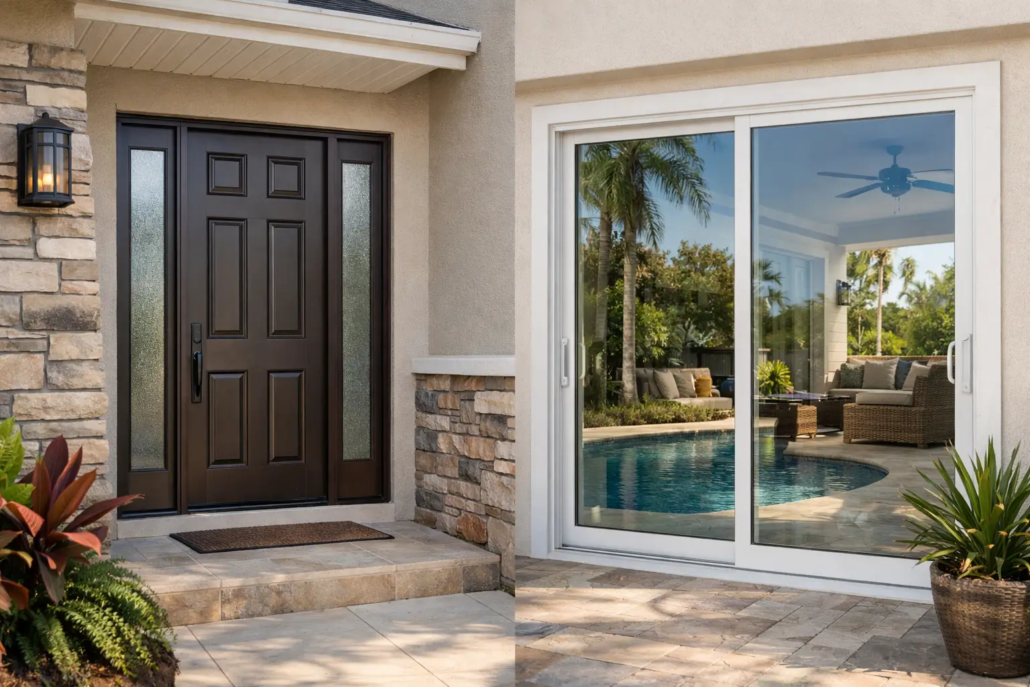
An entry door has a major role in curb appeal, but it also needs to be secure, well insulated, and dependable. Fiberglass and steel entry doors are popular choices because they offer durability with lower maintenance than traditional wood. Fiberglass can provide the look of wood grain while standing up well to moisture and temperature changes. Steel provides a strong, practical option for homeowners focused on security and value.
The best choice depends on the look of the home, sun exposure, and the amount of maintenance you want to take on. A covered porch offers more protection than a fully exposed entry, but every exterior door still needs a properly fitted frame, weatherstripping, threshold, and hardware.
Sliding patio doors
A patio door should bring in light and give your family easy access to the backyard, lanai, or pool area without becoming a source of heat gain. Modern sliding doors can offer better insulated glass, stronger frames, smoother rollers, and tighter seals than aging units.
Glass selection matters here. In Central Florida, low-emissivity glass coatings can help manage solar heat while still allowing natural light into the room. If outside activity, traffic, or neighborhood noise is a concern, upgraded glass packages may also help create a quieter interior. The largest glass opening in the home is often one of the most noticeable places to improve comfort.
A sliding door is a better fit than a hinged patio door when space is limited because it does not swing into the room or onto the patio. On the other hand, homeowners who want a wider open feel may prefer a multi-panel configuration where the opening allows it. The right answer depends on your layout, traffic flow, and budget.
Energy Efficiency Is More Than the Glass
Energy-efficient replacement doors are often discussed in terms of glass, and glass is certainly important for patio doors and entry doors with sidelights or decorative inserts. But the whole system matters. The frame, weatherstripping, threshold, sweep, locking points, and installation all work together to limit air and water intrusion.
A door can have quality insulated glass and still perform poorly if it is not square in the opening or if gaps remain around the frame. That is why professional installation is not an add-on. It is part of the product’s real-world performance.
For Orlando homeowners, reducing heat transfer can help rooms near doors feel less stuffy during long cooling seasons. The savings will vary based on the size and orientation of the opening, the condition of the existing door, your thermostat habits, and the rest of the home’s insulation. Still, a tighter, better-insulated door can make a meaningful difference in comfort, especially where afternoon sun hits large patio glass.
Do Not Overlook Security and Weather Protection
A beautiful door should also give you confidence when you lock up at night or leave for the weekend. Look beyond the handle set. A dependable exterior door system includes a solid frame, secure hinges, reinforced strike areas, quality deadbolt hardware, and locking mechanisms that engage properly.
For patio doors, ask about the locking system and how the panel is designed to resist unwanted movement. The track and rollers should support smooth operation without creating a weak point at the opening. A door that is difficult to move may be inconvenient, but it can also be a sign that its hardware and alignment need attention.
Florida weather adds another consideration. Exterior door products and installation details should be appropriate for local code requirements and the specific conditions of your home. Water management at the sill, flashing practices, and a proper exterior seal are details that do not stand out after installation, but they matter when heavy rain arrives.
Appearance Matters, but So Does Proportion
Replacing a door is one of the quickest ways to change how a home looks from the street or from the backyard. The style should complement the home’s architecture rather than compete with it. A simple paneled entry door may suit a traditional home, while clean lines and larger glass areas can fit a more contemporary design.
Color, decorative glass, sidelights, transoms, grids, and hardware finish all influence the final result. The key is to make those selections after the performance basics are settled. A glass-heavy entry door can brighten a foyer, for example, but homeowners should also consider privacy, sun exposure, and the amount of heat entering that side of the home.
For patio doors, frame color and sightlines can have a big effect on the room. A narrower frame may provide a more open view, while the best configuration for your home may prioritize durability, glass performance, or a specific opening size. There is rarely one “best” replacement door for every house.
What a Professional Door Installation Should Include
A quality installation begins before the old door comes out. Accurate measuring, an inspection of the existing opening, and a conversation about how the door is used help prevent surprises later. If there is hidden wood damage, an uneven opening, or evidence of water intrusion, those concerns need to be addressed rather than covered up.
During installation, the old unit should be removed carefully, the opening prepared, and the new door set level, plumb, and square. The installer should verify that it opens, closes, locks, and seals correctly before finishing the trim and exterior sealing. For a sliding patio door, the panel should glide smoothly and latch without force.
Afterward, homeowners should know how to operate the lock, adjust basic hardware if needed, and care for the door without damaging finishes or weatherstripping. Warranties also deserve a clear explanation. A lifetime product warranty can be valuable, but homeowners should understand what is covered, who performs service, and how installation workmanship is supported.
Window Team USA of Orlando approaches door projects with that practical focus: matching the product to the home, explaining the options clearly, and treating the installation like a long-term investment rather than a quick cosmetic change.
Make the Decision With the Whole Opening in Mind
When comparing replacement doors, avoid making the decision on price or appearance alone. Ask how the door will handle Florida heat, rain, security needs, everyday traffic, and the style of your home. Consider the condition of the frame and surrounding trim, too. A new door deserves an opening that is properly prepared to support it.
The best replacement is the one that feels right every day: it closes easily, locks securely, keeps conditioned air where it belongs, and makes you glad to pull into the driveway. A no-pressure in-home estimate can give you the measurements, product options, and installation details needed to make that decision with confidence.