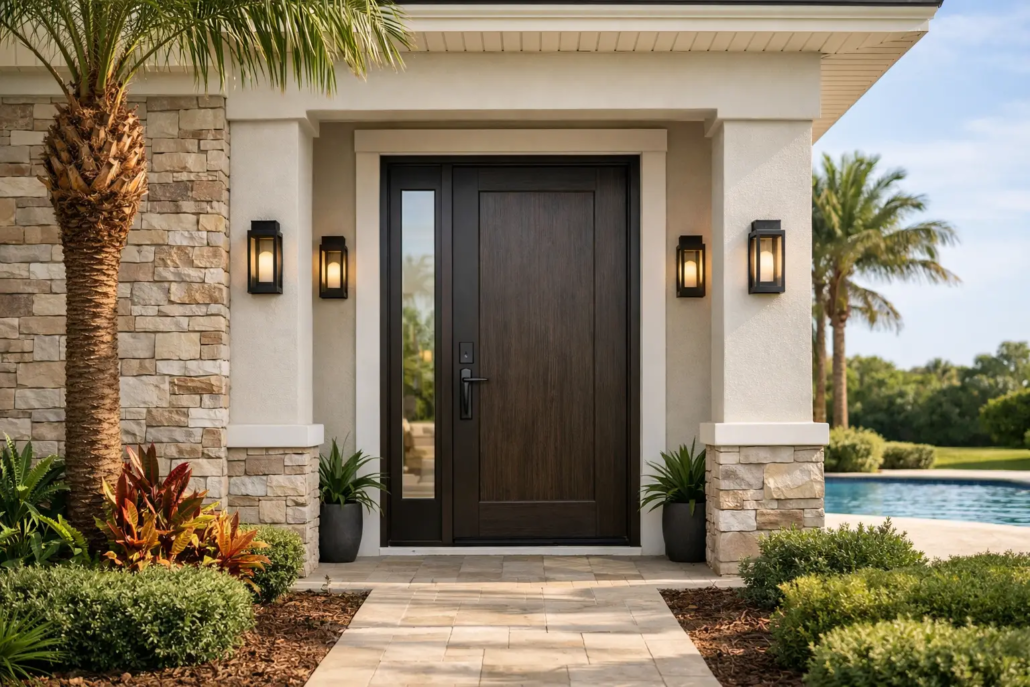
Entry Doors That Work Hard for Orlando Homes
A front door has a tougher job in Orlando than many homeowners realize. Entry doors stand up to punishing sun, heavy rain, humidity, daily use, and the occasional wind-driven storm, all while setting the tone for the home. If yours sticks, leaks, looks faded, feels hot to the touch, or has gaps around the frame, replacement can improve far more than curb appeal.
The right door should feel solid when it closes, help keep conditioned air inside, and complement the home without creating another maintenance project. Choosing well starts with looking beyond color and decorative glass. Material, construction, glass package, hardware, security, and professional installation all affect how the door performs over time.
What to Look for in Entry Doors
The best entry door is not automatically the most expensive one or the one with the most ornate design. It is the door that fits your home, handles Central Florida conditions, and delivers lasting value for the way your family lives.
A good starting point is to consider what your current door is failing to do. Some homeowners are tired of a dated appearance. Others notice water near the threshold after a hard rain, feel warm air around the frame, or struggle with a lock that no longer lines up correctly. Those symptoms can point to problems with the door slab, weatherstripping, threshold, frame, or installation.
A replacement project gives you the opportunity to address the whole opening rather than covering up the issue with a fresh coat of paint. That matters because even a well-made door cannot perform as intended if the surrounding frame is deteriorated or the opening is not properly sealed.
Material Makes a Real Difference
Fiberglass is a practical choice for many Orlando homes. It can provide the look of stained wood or a painted finish without demanding the same level of upkeep as natural wood. Quality fiberglass doors resist dents, moisture-related movement, and fading better than many older door materials. They are also available with insulated cores that can help reduce heat transfer.
Steel entry doors are known for strength and security. They can be an excellent value, especially when homeowners want a clean, classic look and a durable surface. However, the quality of the steel, protective finish, core, and edge construction matters. A low-quality steel door may be more vulnerable to dents or surface damage, particularly if it is exposed to harsh weather without adequate protection.
Wood entry doors bring natural character that is hard to duplicate. For the right home, especially one with a covered entry and a commitment to routine finishing and maintenance, real wood can be a beautiful choice. The trade-off is that Florida heat and humidity can be demanding. Wood requires attention to protect it from moisture, sun exposure, and seasonal expansion and contraction.
There is no one material that works best for every home. A homeowner with a fully covered front porch may have different options than someone whose door faces direct afternoon sun and driving rain. A clear consultation should account for the home’s exposure, architecture, budget, and maintenance expectations.
Energy Performance Starts at the Opening
When cooling costs are a concern, homeowners often think first about windows or attic insulation. The front door deserves attention too. An older or poorly installed door can allow heat and humid outside air into the home through gaps at the jamb, threshold, and weatherstripping.
An energy-efficient door system typically combines an insulated slab with a well-built frame, compression weatherstripping, an adjustable threshold, and proper sealing around the opening. Each part has a job to do. If the threshold is worn or the sweep no longer makes contact, air and water can find their way inside even when the door itself still looks acceptable.
Glass inserts deserve a closer look as well. Decorative glass can add light and personality, but not every glass package performs the same. Insulated glass helps limit heat transfer compared with single-pane glass, while Low-E coatings can help manage solar heat gain. The best choice depends on the door’s orientation, amount of shade, and how much natural light you want at the entry.
More glass is not always better in a hot climate. A door with sidelights and a large glass panel can create a welcoming entrance, but it may need the right insulated glass package to avoid making the foyer hotter or less private. Frosted, textured, or patterned glass can provide daylight while keeping the interior more secluded.
Security Should Feel Built In
A beautiful front door should also help homeowners feel secure. Security begins with a strong frame and a door that closes squarely into the opening. From there, details such as a quality deadbolt, reinforced strike plate, long mounting screws, durable hinges, and a properly aligned latch make a meaningful difference.
Many entry systems also offer multi-point locking hardware. Instead of securing only at the center of the door, this type of system engages at several points along the frame. It can improve the door’s seal and provide an added measure of security. It is especially worth discussing for taller doors, doors with glass, or homes where homeowners want a more substantial closing feel.
If your home needs a door that meets specific wind or impact requirements, product selection should be based on the applicable local code and the opening’s location. This is not an area for guesswork. The correct door, glass, hardware, and installation method must work together to meet the project’s requirements.
Curb Appeal Is More Than a Fresh Color
The front entry is one of the first things guests, neighbors, and prospective buyers notice. Replacing a faded, damaged, or undersized door can change the look of the entire façade. But visual appeal works best when the proportions are right.
A single door may suit a modest entry, while a wider opening could benefit from sidelights, a transom, or double doors. Contemporary homes often look best with clean lines and simple glass patterns. Traditional homes may call for raised panels, divided-light glass, or a stained wood appearance. The goal is not to chase a trend that will feel dated in two years. It is to choose a door that looks like it belongs on your home.
Color should work with the roof, exterior paint, trim, and landscaping. Bold colors can make an entry memorable, but a classic black, deep blue, warm wood tone, or crisp white may offer broader long-term appeal. If your home receives direct sun, ask about finish performance and maintenance recommendations before settling on a dark shade.
Why Installation Is Part of the Product
An entry door replacement is not just a matter of removing one slab and hanging another. The installer must evaluate the existing opening, check for damage, prepare the sill, secure the frame correctly, insulate and seal the perimeter, and make precise adjustments so the door operates smoothly.
Poor installation can lead to drafts, water intrusion, lock alignment problems, premature wear, and a door that feels flimsy despite being well made. A professional installer should take the time to ensure consistent reveals around the door, proper threshold contact, smooth lock operation, and a clean finished appearance inside and out.
This is also why a no-pressure estimate should include more than a quick measurement and a price. Homeowners deserve to understand the material options, the condition of the existing opening, what installation work is included, and how warranty coverage applies. Clear communication before work begins makes for fewer surprises later.
Questions Worth Asking Before You Choose
Before committing to a new door, ask how the material will hold up in direct Florida sun, what insulation and glass options are available, and whether the system includes a strong frame and weatherstripping. Ask how the installer will address any damaged wood or moisture at the opening. It is also reasonable to ask what hardware is included, how the finish should be maintained, and what the product and installation warranties cover.
Price matters, but it should not be the only comparison point. A low initial price can become expensive if it leaves you with poor sealing, weak hardware, or a door that needs attention long before it should. Fair value comes from a product that fits the home, is installed with care, and is backed by people who will stand behind the work.
For Orlando homeowners, a new front door is a daily-use upgrade that can make the home feel more comfortable, secure, and cared for every time you come home. When you are ready to replace yours, choose a team that will inspect the opening, explain the options plainly, and treat your investment with the same respect they would want for Grandma’s home.