Door Installation Process: What Orlando Homeowners Can Expect
A new exterior door should not leave you wondering whether it will stick after the next humid Orlando afternoon or let rain creep in during a hard summer storm. The door installation process is where the value of a quality entry door or sliding patio door is either protected or lost. A well-made door needs a square opening, a properly flashed sill, secure fastening, and careful adjustment to deliver the comfort, efficiency, security, and curb appeal you paid for.
For homeowners, the goal is simple: understand what happens at each stage, know what questions to ask, and recognize why professional installation matters as much as the door itself.
The Door Installation Process Starts Before Installation Day
The best installations begin with a detailed in-home consultation and measurement, not a quick glance at the existing door. Homes settle over time, and older openings are not always perfectly square or level. A professional measures the width, height, depth, jamb condition, threshold area, and surrounding trim so the new unit fits the actual opening rather than an assumed standard size.
This is also the time to decide what the door needs to accomplish. An entry door may need better insulation, a stronger lock system, impact-rated glass, or a design that improves the front of the home. A sliding patio door may need smoother operation, larger glass panels, better sound control, or improved protection from heat and moisture.
Material selection affects both performance and maintenance. Fiberglass and composite entry doors can offer the look of wood with less upkeep in Central Florida’s heat and humidity. Steel can be a cost-conscious, secure choice, while real wood offers a classic appearance but needs consistent maintenance. For patio doors, frame construction, glass package, rollers, and weatherstripping all affect daily use.
A responsible contractor should explain the trade-offs plainly. The lowest upfront price is not always the best value if the door has weak weather protection, limited warranty coverage, or hardware that wears out early. On the other hand, not every home needs the same premium option. The right recommendation should match your opening, your budget, your home’s style, and how you use the space.
Ordering and Preparing for Your New Door
Once measurements and selections are confirmed, the door is ordered to fit the project. Custom sizing, decorative glass, sidelights, paint or stain finishes, impact-rated components, and specialty hardware can affect production time. It is better to wait for the correct unit than force a nearly correct door into an opening.
Before installation day, clear a path to the doorway and move furniture, rugs, wall décor, and fragile items away from the work area. If the installation involves a patio door, plan for access to both the interior and exterior sides. Installers need room to safely carry the new unit, protect nearby surfaces, remove the old door, and work around the opening.
A good crew arrives prepared to keep the job organized. That includes protecting floors where needed, containing debris, and reviewing the scope with the homeowner before work begins. If there are unexpected issues behind old trim or beneath a threshold, clear communication matters. Hidden water damage or deteriorated framing should be addressed correctly rather than covered up just to keep the job moving.
Permits and Florida Requirements
Permit requirements depend on the type of project, the product, and local jurisdiction. In Florida, exterior door replacement may involve building-code requirements for wind resistance, water protection, energy performance, and egress. Homes in areas subject to specific wind-borne debris requirements may need approved impact-rated products or another compliant protection method.
Your contractor should be able to explain what applies to your home and handle the work according to applicable local requirements. This is not paperwork for paperwork’s sake. Proper documentation and approved products help protect your investment, especially when you sell the home or make an insurance claim.
What Happens on Installation Day
The existing door is removed carefully so the surrounding framing can be evaluated. This step is more involved than taking out a slab and putting in a new one. The installer checks the rough opening, subfloor, sill area, jambs, and exterior sheathing for signs of rot, gaps, prior water intrusion, or structural movement.
If the opening is sound, the crew prepares it for the new unit. Preparation typically includes cleaning the opening, correcting minor irregularities, installing appropriate sill protection or flashing, and applying sealant where required. The sill is especially important in Orlando’s rain-heavy climate. Water must be directed away from the house, not trapped beneath the threshold where it can cause long-term damage.
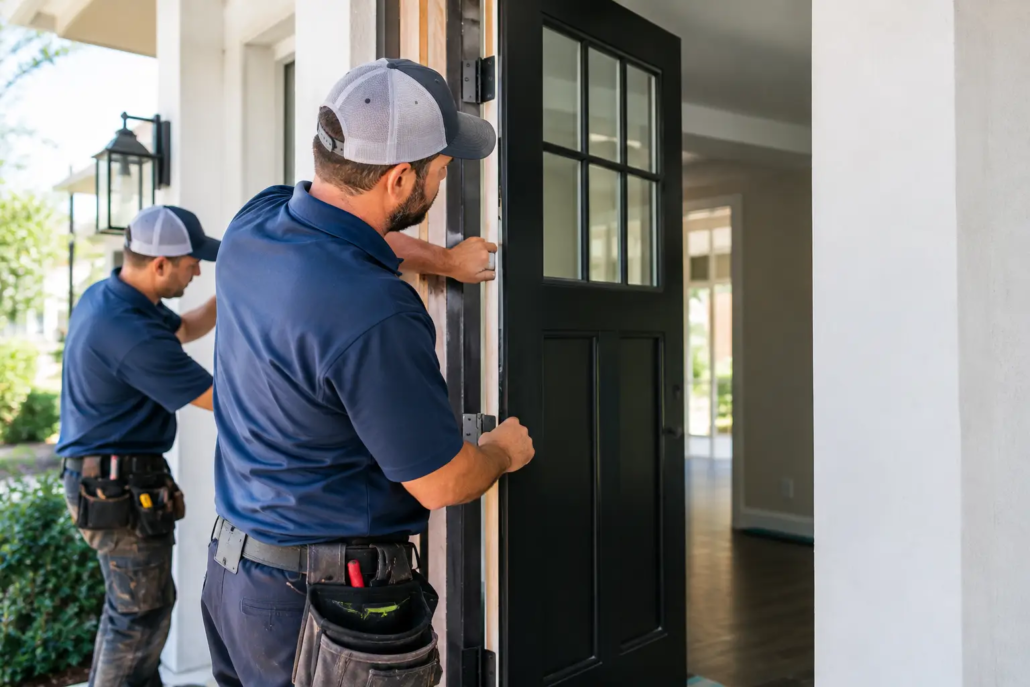
Next, the new door unit is set into the opening. Installers use shims to make the frame plumb, level, and square before permanently fastening it. This is the point where craftsmanship shows. A door can look fine from a few feet away but operate poorly if the frame is even slightly out of alignment.
For an entry door, the crew checks that the slab swings freely, the reveal around the door is even, the latch engages smoothly, and the deadbolt aligns without forcing it. For a sliding patio door, they test the rollers, panel alignment, locking hardware, and screen operation. The door should open and close without scraping, binding, rattling, or excessive effort.
Once the frame is secured, installers insulate appropriate gaps around the unit and finish the interior and exterior trim details. Proper insulation and sealing help reduce air leakage, outside noise, and the hot spots that make rooms uncomfortable near exterior doors. Exterior sealant is applied carefully to prevent water intrusion while allowing the assembly to perform as designed.
Why Proper Door Installation Matters in Orlando
Central Florida puts exterior doors to work. Strong sun, high humidity, frequent rain, and active hurricane seasons test seals, thresholds, finishes, and hardware. A poorly installed door can develop problems quickly: drafts around the frame, water at the sill, difficult operation, condensation, or premature wear on locks and rollers.
Professional installation protects more than comfort. It supports the door’s energy performance, security features, and warranty coverage. Even a high-performance insulated door or energy-efficient glass package cannot perform as intended if there are gaps around the frame or drainage problems beneath it.
The installation also affects your home’s appearance. Uneven gaps, poorly matched trim, smeared caulk, or a threshold that sits awkwardly against flooring can make a new door look like an afterthought. Careful finishing is what makes the project feel like it belongs with the home.
The Final Inspection and Homeowner Walk-Through
The job is not complete when the door is in place. A professional crew should clean the work area, remove installation debris, and walk you through the finished door. During that review, test the operation yourself. Open and close the door, engage the lock, inspect the weatherstripping, and look at the trim from inside and outside.
Ask how to care for the finish, clean the glass, maintain tracks or rollers, and use any multipoint locking hardware. You should also receive warranty information and know who to call if a concern appears after installation. A dependable local contractor stands behind the work instead of disappearing when the truck leaves the driveway.
Window Team USA of Orlando approaches door projects with that kind of accountability: clear recommendations, professionally fitted products, and respect for the home throughout the job. A no-pressure estimate is a practical place to start if your current entry door or patio door is showing its age.
A door should feel solid every time you use it, close tightly when the weather turns, and make your home more comfortable without demanding your attention. When you are ready to replace one, choose a team that treats careful preparation and final adjustment as part of the product, not as extras.