Window Replacement Contract Guide for Orlando

Window Replacement Contract Guide for Orlando

A window quote can look clear during a kitchen-table conversation, then feel very different once it becomes a contract. This window replacement contract guide helps Orlando homeowners know what should be in writing before they approve a project, make a deposit, or schedule installation.

A good contract does more than state a final price. It protects your home, sets expectations for the crew, and gives both you and the contractor a shared plan for handling the details that matter: product specifications, installation methods, payment timing, permits, cleanup, and warranty service. If a promise influenced your decision, it belongs in the agreement.

Start With a Complete Scope of Work

The scope of work is the backbone of a replacement window contract. It should identify exactly what is being replaced, including the number of windows or doors, their locations, sizes, styles, and operating configurations. “Ten replacement windows” is not enough if your project includes a mix of double-hung, casement, picture, or sliding windows.

Look for product details that match the proposal you reviewed. At a minimum, the contract should identify the manufacturer or product line, frame material, glass package, color, grid pattern, hardware finish, screens, and any specialty features. In Central Florida, glass choices are not minor details. Low-E coatings, insulated glass, tint, and triple-pane construction can affect indoor comfort, outside noise, condensation resistance, and cooling costs.

The agreement should also state what happens to existing windows. Most replacement projects use an insert installation, where the new window is installed within the existing frame. This can be an excellent option when the surrounding frame is solid and square. Full-frame replacement may be the better choice when there is rot, water damage, major frame deterioration, or a need to change the opening size. Neither approach is automatically better. The right method depends on your home’s condition, and the contract should make that method clear.

Make Sure Pricing Is Truly Complete

A trustworthy contract should show the total contract price and explain what is included. Ask whether that amount covers measurements, product ordering, delivery, labor, removal of old units, disposal, trim, caulking, flashing where needed, cleanup, permits, and final inspection requirements.

Be especially careful with broad phrases such as “as needed” or “additional charges may apply.” Some unknowns are reasonable. Hidden rot behind exterior trim, for example, cannot always be confirmed until old windows come out. But the contract should explain how those discoveries will be documented, priced, and approved before extra work begins.

If financing is part of the purchase, read the financing documents separately from the installation contract. Confirm the amount financed, interest rate, promotional terms, monthly payment, and what happens after any introductory period ends. A low monthly number is not the same thing as a low total cost.

You should also understand the payment schedule. A deposit is common for custom-made windows, but the timing and amount should be written down. Avoid vague arrangements or pressure to pay the entire project amount well before installation is complete. Final payment should align with the work being substantially completed and your opportunity to inspect it.

Review the Installation Details That Protect Your Home

Replacement windows are only as dependable as the installation behind them. Even a high-performing window can fall short if it is poorly fitted, improperly sealed, or installed without attention to drainage and exterior protection.

Your contract does not need to read like a construction manual, but it should describe the installer’s responsibility. That may include removing old units, inspecting openings, setting and securing new windows, insulating gaps, sealing exterior joints, reinstalling or replacing trim as specified, and leaving the area clean. If interior or exterior finishes will be disturbed, clarify who is responsible for touch-up painting, stucco repair, drywall repair, or specialty trim work.

This is also the place to discuss access and site conditions. Homeowners may need to move furniture, remove window treatments, secure pets, and provide clear paths to the work areas. A professional contractor should explain what the crew will protect and what preparation is expected from you. Clear communication prevents small surprises from becoming frustrating ones on installation day.

Ask How Changes Will Be Handled

Changes happen. A homeowner may decide to add a window, switch grid styles, or upgrade glass after signing. An installer may discover concealed damage that needs repair before a new unit can be installed correctly.

The contract should require written change orders for any adjustment to price, product, or scope. Do not rely on a verbal conversation, even when everyone has good intentions. A simple written approval protects both sides and keeps the final invoice from becoming a disagreement.

Confirm Permits, Licensing, and Insurance

Permitting requirements can vary by location and by project type. In Orlando and surrounding communities, a contractor should be able to tell you whether a permit is required, who will pull it, and whether inspection steps apply. If the homeowner is expected to obtain the permit, make sure you understand why and what responsibilities that creates.

The contract should identify the legal business name and contractor license information when applicable. It should also provide a physical business address and reliable contact information. These details matter if you need service after installation, have a warranty question, or need to resolve an issue months later.

Insurance is another practical safeguard. Ask whether the contractor carries general liability and workers’ compensation coverage or has a valid exemption where allowed. You are inviting a crew to work on one of your biggest investments. Local accountability and proper coverage are worth confirming before work begins.

Understand Product and Labor Warranties

“Lifetime warranty” can sound simple, but warranty language deserves a closer look. Product warranties and installation warranties are often separate. A manufacturer may cover a defect in the window itself, while the contractor covers workmanship, installation-related leaks, or service needs caused by the install.

Read what each warranty covers, how long it lasts, whether it transfers to a future homeowner, and what exclusions apply. Glass breakage, seal failure, hardware, screens, finish, accidental damage, and labor can all be treated differently. For windows exposed to Florida heat, rain, and humidity, ask how to request service if you notice fogging between glass panes, difficult operation, water intrusion, or damaged components.

A strong warranty is valuable, but the company standing behind it matters just as much. Choose a contractor that is prepared to answer the phone after the final check is written. Window Team USA of Orlando approaches service with that local responsibility in mind, because replacement windows should be a long-term improvement, not a short-term transaction.

Check the Timeline Without Expecting a Guess

Custom windows are typically measured, ordered, manufactured, delivered, and then installed. That means the project timeline can be affected by manufacturing schedules, material availability, weather, permitting, and the condition of your existing openings.

Your contract should provide a realistic estimated timeline, but be cautious of anyone who guarantees an exact installation date before products are ordered and confirmed. A better agreement explains how the contractor will communicate delays, schedule installation once materials arrive, and address weather-related rescheduling.

It should also explain what happens if products arrive damaged or incorrect. The contractor should inspect materials and work with the manufacturer on replacements, but homeowners need to know whether that could affect installation timing. Clear expectations are more useful than an unrealistic promise.

Read Cancellation and Dispute Terms Before Signing

Take time to review cancellation language, especially if you signed at home after a sales presentation. Florida consumer rules may provide cancellation rights in certain situations, but those rights depend on the circumstances and timing. The contract should clearly state the cancellation process, deadlines, and how notice must be delivered.

Also look at dispute-resolution language. You hope never to need it, but it should be understandable. Ask how the company handles workmanship concerns, punch-list items, warranty service, and unresolved disagreements. A contractor that communicates well before the sale should be willing to explain its process after the sale too.

A Final Contract Checklist

Before signing, make sure you can answer these questions confidently:

  • Does the contract match the windows, doors, colors, glass, and options you selected?
  • Is the full price clear, including known labor, removal, disposal, permits, and trim work?
  • Does it explain the installation method and how concealed damage or other changes are approved?
  • Are payment dates, estimated timing, warranty coverage, cancellation terms, and service contacts in writing?

A replacement window contract should leave you feeling informed, not rushed. Read it in a quiet moment, ask for clarification on anything unclear, and keep a signed copy with your warranty papers. The right contractor will respect those questions, because careful planning is part of doing the job right for your home and family.
Orlando Home Window Style Guide for Every Home

Orlando Home Window Style Guide for Every Home

A replacement window should do more than fill an opening. In Central Florida, it needs to help manage strong sun, summer humidity, cooling costs, rain, and the everyday noise that comes with living in a growing metro area. This Orlando home window style guide helps homeowners match window styles to the way their house looks, feels, and functions – without choosing based on appearance alone.

The right answer is rarely one window style for the whole house. A picture window may be perfect for the front living room, while a casement window makes better sense above the kitchen sink. The goal is to create a coordinated look while giving each room the ventilation, daylight, privacy, and energy performance it needs.

Start With Your Home’s Architecture

Your windows should support the character of your home rather than compete with it. That does not mean you have to duplicate every detail of an older window. Replacement windows can improve comfort and efficiency while still respecting the proportions, grid patterns, and sightlines that make a home look like itself.

Traditional homes, including many Colonial-inspired, ranch, and cottage-style properties, often look right with double-hung windows. Their vertically sliding sashes create a familiar, balanced appearance. Grids can add classic detail, but they should be selected carefully. Too many grids can make a smaller window feel busy, while a simple pattern can preserve the home’s original character.

Mediterranean and Spanish-influenced homes are common around Orlando. These homes often benefit from clean casement windows, picture windows, and thoughtfully placed arched or specialty shapes. A wider frame profile or a warm exterior color can complement stucco, tile roofs, and substantial trim. Large fixed glass areas can also highlight a landscaped view, but they should be planned with sun exposure in mind.

For contemporary homes, simple lines usually work best. Picture windows, horizontal sliders, and casements with minimal grids create an open, current look. The priority is often broader glass and less visual clutter. On a modern exterior, a window that is overly decorative can look out of place even if it performs well.

Choose Window Styles by How Each Room Works

A beautiful window that does not provide the ventilation or access you need can become a daily frustration. Before selecting a style, think about what happens in that room and whether the window will be easy to operate, clean, and enjoy.

Double-hung windows for flexible, familiar ventilation

Double-hung windows remain a popular choice because both sashes can operate. Opening the lower sash lets cooler air enter, while lowering the upper sash can help warmer air move out. They are a practical fit for bedrooms, living rooms, and traditional facades.

Many replacement double-hung windows offer tilt-in sashes, which can make cleaning exterior glass easier from inside the home. They are not always the best choice where a wide, uninterrupted view is the main goal, but they offer a dependable blend of appearance and function.

Casement windows for airflow and a tighter close

Casement windows hinge at the side and crank outward. Because the sash closes against the frame, they can provide a strong weather seal when properly made and installed. Their open sash can also catch side breezes, making them useful in kitchens, bathrooms, and rooms where ventilation matters.

They work especially well over a countertop or sink because a crank is easier to reach than a sash that must be lifted. Keep in mind that the window opens outward, so it needs clearance from walkways, shrubs, and exterior fixtures.

Awning and hopper windows for compact spaces

Awning windows hinge at the top and open outward from the bottom. They are often used higher on a wall, in bathrooms, or paired beneath larger fixed windows. Their design can allow ventilation during a light rain, although homeowners should still close them during heavy storms and windy weather.

Hopper windows hinge at the bottom and open inward from the top. They are commonly used in smaller areas where privacy is needed, such as laundry rooms or bathrooms. Neither style is usually the main visual feature of a home, but both can solve a specific ventilation need neatly.

Picture windows when the view should lead

Picture windows do not open, which means they are best for rooms where daylight and a clear view matter more than airflow. They can make a living room feel larger, frame a pool area or backyard, and bring in natural light without adding operating hardware.

The trade-off is simple: fixed glass does not ventilate. Many homeowners pair a large picture window with operable casements or double-hung windows on either side. This creates a broad view while keeping fresh-air options available.

Horizontal sliders for wide openings

Horizontal slider windows move side to side and work well in wide openings with limited exterior clearance. They are a practical choice for bedrooms, family rooms, and areas facing patios or walkways. Their clean horizontal shape often suits ranch homes and contemporary designs.

A slider may not offer the same open area as a casement window of similar size, but it is easy to operate and can provide a strong visual fit for the right elevation.

Use Bay and Bow Windows to Change the Room

Bay and bow windows project beyond the exterior wall, adding dimension outside and usable space inside. A bay window typically has a larger center panel with angled side windows. A bow window uses several panels to create a softer curve.

Both styles can brighten a dining area, create a reading nook, or give a plain front wall more character. Because they are more involved than a standard replacement opening, proper measurement, structural planning, flashing, insulation, and installation matter greatly. They can be a worthwhile investment, but they are not a one-size-fits-all upgrade for every wall.

Put Energy Performance Ahead of Glass Size Alone

Large windows can look great in Florida, but more glass also means more exposure to solar heat. The best window layout balances daylight with the comfort of the room. A west-facing family room with broad, unshaded glass may need different glass options than a shaded north-facing bedroom.

Ask about low-emissivity coatings, insulated glass packages, frame construction, and air infiltration performance. These details affect how much heat transfers through the window and how hard your air conditioner must work. In many homes, triple-pane replacement windows can also improve sound reduction and interior comfort. Whether triple-pane is the right value depends on the opening, the exposure, the existing windows, and your goals for the project.

Vinyl windows offer low-maintenance value and strong energy performance for many Orlando homes. Composite options can provide a more substantial look and added durability. Real-wood windows bring natural warmth and architectural character, especially for homeowners restoring a traditional design. Each material has a place. The best choice is the one that fits your home, your budget, and the maintenance you are prepared to handle.

Make the Front of the House Feel Intentional

Curb appeal improves when window sizes, grid patterns, colors, and sightlines feel coordinated. That does not require every window to be identical. A bathroom may need obscured glass, a stairwell may need a tall fixed unit, and a main living area may call for larger glass. What matters is that the choices look connected from the street.

Look at the entire front elevation before approving one window at a time. Consider where window tops align, whether grid patterns match, and how the frame color works with the roof, exterior paint, and entry door. Small decisions can make a major difference in whether a finished project looks planned or pieced together.

Do Not Treat Installation as an Afterthought

Even a well-built window can underperform if it is measured or installed poorly. Water management, insulation around the opening, level operation, exterior sealing, and interior finish work all affect the result. In Florida’s heat and rain, shortcuts can lead to drafts, moisture issues, difficult operation, and lost efficiency.

A professional consultation should include more than selecting a style from a brochure. It should account for the condition of the existing openings, the direction each wall faces, your ventilation needs, and the appearance you want to achieve. Window Team USA of Orlando approaches replacement projects with those details in mind, then backs the work with professional installation and lifetime-warranted product options.

Before making a final choice, stand in each room and ask a few practical questions: Do you need this window to open? Is afternoon sun making the room uncomfortable? Will the style be easy to clean and operate? Does it fit the rest of the home? Those answers usually lead to a better decision than following a trend.

The best replacement windows should make your home feel quieter, more comfortable, and more like yours every day – while still holding up to the Florida weather outside.

Fiberglass Versus Steel Entry Doors for Orlando Homes

Fiberglass Versus Steel Entry Doors for Orlando Homes

Your front door takes a beating in Central Florida. It faces intense sun, afternoon rain, humidity, temperature swings, and plenty of daily use. When comparing fiberglass versus steel entry doors, the best choice is rarely about picking the material with the biggest sales pitch. It is about choosing the door that fits your home, budget, exposure, and expectations for long-term maintenance.

Both materials can provide a secure, attractive upgrade from an aging wood door or a builder-grade entry door. Both are available with decorative glass, sidelights, insulated cores, and a wide range of colors and panel styles. The differences show up in how they handle Florida weather, physical impacts, energy loss, and years of ownership.

Fiberglass Versus Steel Entry Doors: The Main Difference

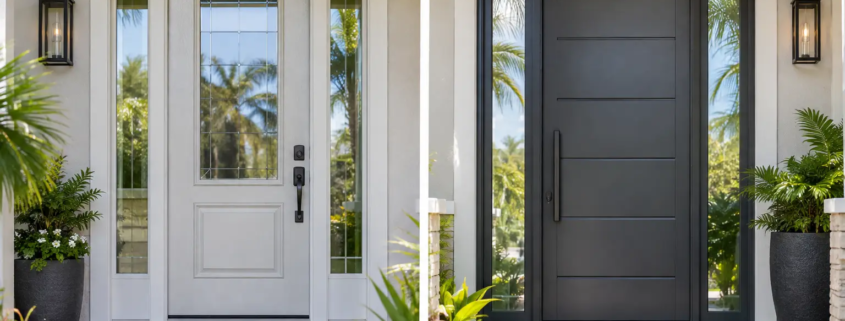
A fiberglass entry door is built with a durable fiberglass skin over an insulated core. Many styles are molded to resemble painted wood or stained woodgrain, giving homeowners the look of a traditional wood door without the same level of upkeep. Fiberglass does not rust, and it stands up well to humid conditions.

A steel entry door uses a steel exterior skin, typically wrapped around an insulated core. It offers a crisp, clean appearance and is often the more affordable option at the beginning of a project. Steel is naturally strong, but its finish matters. If the coating is deeply scratched or damaged, exposed metal can eventually corrode in Florida’s wet climate.

Neither material is automatically right for every home. A covered entry with limited sun exposure may make a steel door an excellent value. A front door that receives direct afternoon sun, wind-driven rain, or frequent family traffic may point more strongly toward fiberglass.

How Each Door Handles Orlando Heat and Humidity

Orlando homeowners think about cooling costs for good reason. Your entry door is not as large as your window area, but an older, poorly sealed door can still allow hot, humid air into the home. That can make the foyer uncomfortable and put additional work on your air-conditioning system.

Fiberglass is generally the stronger choice for long-term stability in heat and humidity. The material does not expand and contract as dramatically as steel, and it is not vulnerable to rust. A quality fiberglass door with an insulated core, well-fitted weatherstripping, and a properly installed threshold can help keep conditioned air where it belongs.

Steel doors can also be energy efficient, especially when they have an insulated core and are installed correctly. The steel skin itself conducts heat more readily than fiberglass, though, which can be a consideration on a fully exposed entry. The complete door system matters more than the skin material alone. Gaps around the frame, worn sweep seals, poor thresholds, and improper installation can undermine the performance of either option.

Do not overlook sun exposure

Before selecting a door, consider where your front entry faces. A shaded, covered porch creates a very different environment than a west-facing door that gets hours of late-day Florida sun. Dark finishes can absorb more heat, while certain decorative glass packages can add solar exposure. A knowledgeable installer can help match the material, finish, glass, and overhang conditions to the location of your door.

Security Depends on the Whole Entry System

Homeowners often assume steel always means better security. Steel is a tough material, and a steel door can be an excellent security choice. But the door slab is only one part of the equation.

A secure entry depends on a solid frame, a reinforced lock area, quality hinges, a properly installed deadbolt, and long screws that anchor the strike plate into the framing behind the jamb. Glass choices also matter. If you want decorative glass near a lock, ask about options designed for entry-door use and how the locking hardware is configured.

Fiberglass doors can also provide strong security when paired with quality hardware and a well-built frame. They are not flimsy just because they are not metal. For most residential projects, professional installation and hardware selection have as much to do with real-world security as the decision between fiberglass and steel.

For homes where storm readiness is a priority, look at the specific door system’s wind and impact ratings rather than assuming one material is automatically better. Florida conditions demand products and installation methods suited to the opening and local code requirements.

Appearance and Curb Appeal

Your front door is one of the first details guests notice. It also has an outsized effect on how you feel when you pull into the driveway.

Fiberglass offers more flexibility when homeowners want the warmth of woodgrain without a real wood door’s ongoing refinishing needs. It works especially well with traditional, craftsman, Mediterranean, and transitional homes. Modern fiberglass designs are also available with smooth finishes and clean lines.

Steel is a smart fit for homeowners who prefer a smooth, straightforward appearance. It can complement contemporary exteriors, ranch homes, and simple traditional facades. It also offers a wide selection of paint colors and decorative glass designs.

The best-looking door is one that fits the home rather than competing with it. Consider the exterior color palette, the size of the entry, whether you have sidelights, and the visual weight of your garage door and windows. A larger entry system may benefit from a door style with more detail, while a compact porch can look better with a cleaner design.

Maintenance: Dents, Scratches, and Florida Moisture

Fiberglass has a clear advantage when it comes to resisting dents. If kids, pets, furniture moves, or everyday activity create the occasional bump at the front door, fiberglass is less likely to show a noticeable dent. It will not rust, which is a major benefit in a humid climate.

That does not mean fiberglass is indestructible. A severe impact can crack the surface, and repairs may require professional attention. Painted finishes should still be cleaned periodically, and the weatherstripping should be checked as part of normal home maintenance.

Steel doors can dent from hard impacts, and a damaged finish needs prompt attention. A small scratch is usually manageable if it is cleaned, primed when needed, and touched up before moisture reaches the metal. Neglecting exposed areas for years can lead to rust, especially around the bottom edge of the door or in areas that receive repeated rain.

For a busy household looking for the lowest-maintenance option, fiberglass usually has the edge. For a protected entry where value is the top priority, steel can remain a practical and attractive choice.

Cost: Initial Price Versus Long-Term Value

Steel entry doors often cost less upfront than comparable fiberglass models. That makes them appealing when you need a dependable replacement door without stretching the project budget. A quality steel door can provide a meaningful improvement in appearance, insulation, and security over a worn-out original door.

Fiberglass usually carries a higher initial price, particularly in realistic woodgrain styles or custom sizes. The added cost may make sense when the door is highly visible, exposed to demanding weather, or expected to serve the home for many years with minimal maintenance. Homeowners who want a stained-wood look often find fiberglass to be a better long-term value than wood.

Price should include more than the slab. Ask what is included for the frame, sill, weatherstripping, lock preparation, hardware, trim work, removal of the old door, and installation. A door can look good in a showroom but perform poorly if the opening is not measured, prepared, and sealed correctly.

Questions to Ask Before Choosing Your Entry Door

A good door consultation should make the decision clearer, not more complicated. Start by discussing whether your entry is covered, how much direct sun it receives, and whether the existing frame shows signs of water damage or air leakage. Then consider the look you want, the glass privacy level your family needs, and how long you plan to stay in the home.

It also helps to ask about the door’s insulated core, weatherstripping, frame material, warranty coverage, finish requirements, and available performance ratings. If your home has an unusually wide or tall opening, sidelights, or a transom, the condition of the surrounding structure deserves close attention as well.

At Window Team USA of Orlando, a no-pressure estimate is designed to account for those real conditions, not just hand you a material comparison. The goal is a door that fits squarely, seals properly, complements the house, and gives your family confidence every time it closes.

A steel door may be the sensible value choice for a protected entry and a defined budget. A fiberglass door may earn its higher price on a sun-exposed Orlando home where durability, woodgrain style, and low maintenance matter most. The right next step is to have the opening evaluated carefully, then choose the door system that will still serve your home well after the new-door excitement has worn off.

Window Frames: The Right Choice for Orlando Homes

Window Frames: The Right Choice for Orlando Homes

A replacement window can have excellent glass and still disappoint if its frame is a poor fit for your home. In Central Florida, window frames handle far more than holding the glass in place. They help manage heat transfer, resist moisture, support smooth operation, and protect the weather-tight connection between your home and the outdoors.

For Orlando homeowners, choosing a frame material is not simply a style decision. It affects how the room feels on a hot afternoon, how much maintenance a window needs over time, and whether the finished project looks right on the home. The best choice depends on your priorities, your architecture, and the condition of the openings themselves.

What Window Frames Actually Do

The frame is the structural perimeter of the window. It includes the head at the top, jambs on the sides, sill at the bottom, and, depending on the style, movable sash that holds the glass. Together, these parts keep the window square, help it open and lock correctly, and provide the foundation for weatherstripping and insulation.

A quality frame also contributes to energy performance. Heat can move through window materials, and direct Florida sun puts that performance to the test. A poorly insulated or aging frame can make a room feel warmer near the window, even when the air conditioner is working hard. Condensation, water staining, drafts, sticking sashes, and noticeable outdoor noise can also point to a window system that is no longer doing its job well.

Frame performance is only one part of the equation. Glass packages, spacers, weatherstripping, hardware, and professional installation all matter. Still, the frame sets the stage. If it is warped, deteriorated, or improperly fitted to the opening, the other components cannot perform as intended.

Vinyl Window Frames: Practical Value for Florida Homes

Vinyl remains a popular replacement window frame material because it offers strong everyday value. Quality vinyl frames do not need painting, resist moisture, and are designed to handle humid conditions without rusting or rotting. Their multi-chamber construction can also help limit heat transfer compared with older, less efficient window designs.

For many homeowners, vinyl is the sensible choice when comfort, low upkeep, and budget all matter. It is available in a wide range of window styles, including double-hung, casement, picture, slider, awning, and bay or bow configurations. A well-made vinyl window can provide a clean, finished look without adding another exterior maintenance project to the household list.

The trade-off is that not every vinyl frame is built to the same standard. Thin frames, weak corners, basic hardware, and limited reinforcement can affect long-term operation and appearance. Color choices may also be more limited than with other materials, especially when a homeowner wants a deeply saturated exterior finish. The right question is not whether vinyl is good or bad. It is whether the specific window is built for lasting performance in the opening where it will be installed.

Composite Window Frames: Strength With Design Flexibility

Composite frames are made from engineered materials designed to combine the benefits of different components. Depending on the product, they may offer impressive strength, stability, insulating properties, and a more substantial appearance than standard vinyl. They can be a strong fit for homeowners who want enhanced durability and more design flexibility without committing to the maintenance demands of natural wood.

This category can be especially appealing for larger openings, darker exterior colors, or homes where a more refined frame profile matters. A stable frame helps keep sashes aligned and operating properly through temperature swings and years of daily use. Composite products may also provide interior and exterior finish options that complement a broader range of architectural styles.

Cost is the main consideration. Composite windows generally carry a higher upfront price than entry-level vinyl, and the available products vary significantly by manufacturer. For a homeowner planning to stay in the house for many years, that investment may make sense. For another family, a premium vinyl window with a high-performance glass package may deliver the better overall value. A good consultation should compare those options honestly rather than push one material for every home.

Real-Wood Frames: Character That Deserves Proper Care

Real-wood window frames bring warmth, texture, and detail that other materials work hard to imitate. In a traditional home, a historic-inspired renovation, or a space with stained interior trim, wood can be the right visual choice. It can also be painted to match existing interior millwork with exceptional precision.

Wood does require more attention than vinyl or many composite options. Florida humidity, sun exposure, and water intrusion can take a toll when protective finishes are neglected or exterior cladding is damaged. The key is choosing a well-built product, maintaining finishes as recommended, and making sure the installation is carefully detailed to direct water away from the opening.

For some homeowners, the look is worth the responsibility. For others, a wood-look composite or a carefully selected vinyl finish offers a similar visual direction with less ongoing maintenance. Neither answer is automatically better. It depends on the home and how much upkeep you reasonably want to take on.

Choosing Window Frames for Your Home’s Priorities

Start with the room, not just the catalog. A west-facing living room that gets strong afternoon sun may call for a different combination of frame and glass performance than a shaded bedroom. A street-facing office may make sound reduction a priority. A bathroom may need a frame that handles frequent humidity well, while a large picture window needs the structural support and sightlines that suit a broad expanse of glass.

Your home’s exterior matters too. Contemporary homes often look right with clean lines and narrower profiles. More traditional homes may benefit from divided-light patterns, wood interiors, or frame proportions that match the original architecture. Replacement windows should improve curb appeal, not make the home look like it was fitted with a one-size-fits-all product.

It also helps to think about ownership plans. If you expect to remain in the home for decades, long-term maintenance and performance deserve extra weight. If you are preparing to sell, durable windows that improve appearance, comfort, and buyer confidence can still be a smart investment. In either case, avoid selecting by price alone. The lowest initial bid may leave out frame quality, installation details, warranty coverage, or the glass package needed for Central Florida conditions.

Do Not Overlook Frame Depth and Installation

A replacement window is only as dependable as the work around it. The installer must measure the opening accurately, address any damaged wood or surrounding materials, set the unit square and level, insulate gaps correctly, and seal the exterior with the right materials. That work affects air leakage, water management, operation, and appearance.

Frame depth matters because the new window must fit the existing wall and opening properly. A shallow or poorly matched replacement can create awkward trim details, reduce glass area unnecessarily, or leave weaknesses around the perimeter. During an estimate, ask how the installer will handle trim, insulation, exterior sealant, and any concealed damage found after the old window comes out. Clear answers before work begins are a sign of a contractor who respects your home.

Signs Your Existing Frames May Be Ready for Replacement

Older frames do not always need immediate replacement, but recurring issues are worth investigating. Watch for windows that are difficult to open, close, or lock; visible warping, cracking, rot, or corrosion; drafts near the frame; water stains around interior trim; and fogging between panes of insulated glass. Increasing outside noise and rooms that stay uncomfortably warm can also signal that the complete window system is underperforming.

Some problems can be repaired, particularly when the frame is sound and the issue is limited to hardware or weatherstripping. But when the frame itself has failed or repeated repairs are only buying time, replacement can be the more responsible long-term decision. A professional evaluation should identify the cause, not just cover up the symptom.

A Better Way to Compare Replacement Windows

When comparing proposals, make sure each company is describing the complete system. Ask which frame material and construction are included, what glass package is proposed, how the product handles Florida heat and moisture, and what warranty coverage applies to both product and installation. Also ask who will perform the work and how the crew will protect your home during installation.

Window Team USA of Orlando approaches these decisions with a no-pressure, consultation-led process because the right answer should fit the house, the homeowner’s goals, and the budget. Whether the best fit is value-focused vinyl, high-end composite, or real wood, the recommendation should be clear enough that you understand what you are paying for and why.

The right frame will not call attention to itself every day. It will help your windows operate smoothly, keep conditioned air where it belongs, stand up to Florida weather, and make your home feel better to live in. That is the kind of improvement worth taking the time to choose well.